Reference priority
One primary · supporting inspirationMark which image controls the project and which images contribute only a root, highlight, texture or finish idea.
Custom color & texture collection · Made to order
Translate one primary reference into a base tone, root direction, placement map, texture state and complete wig specification—then approve one identified physical sample before planned bulk production.
100% human hair · Reference-led development · MOQ from 1 piece
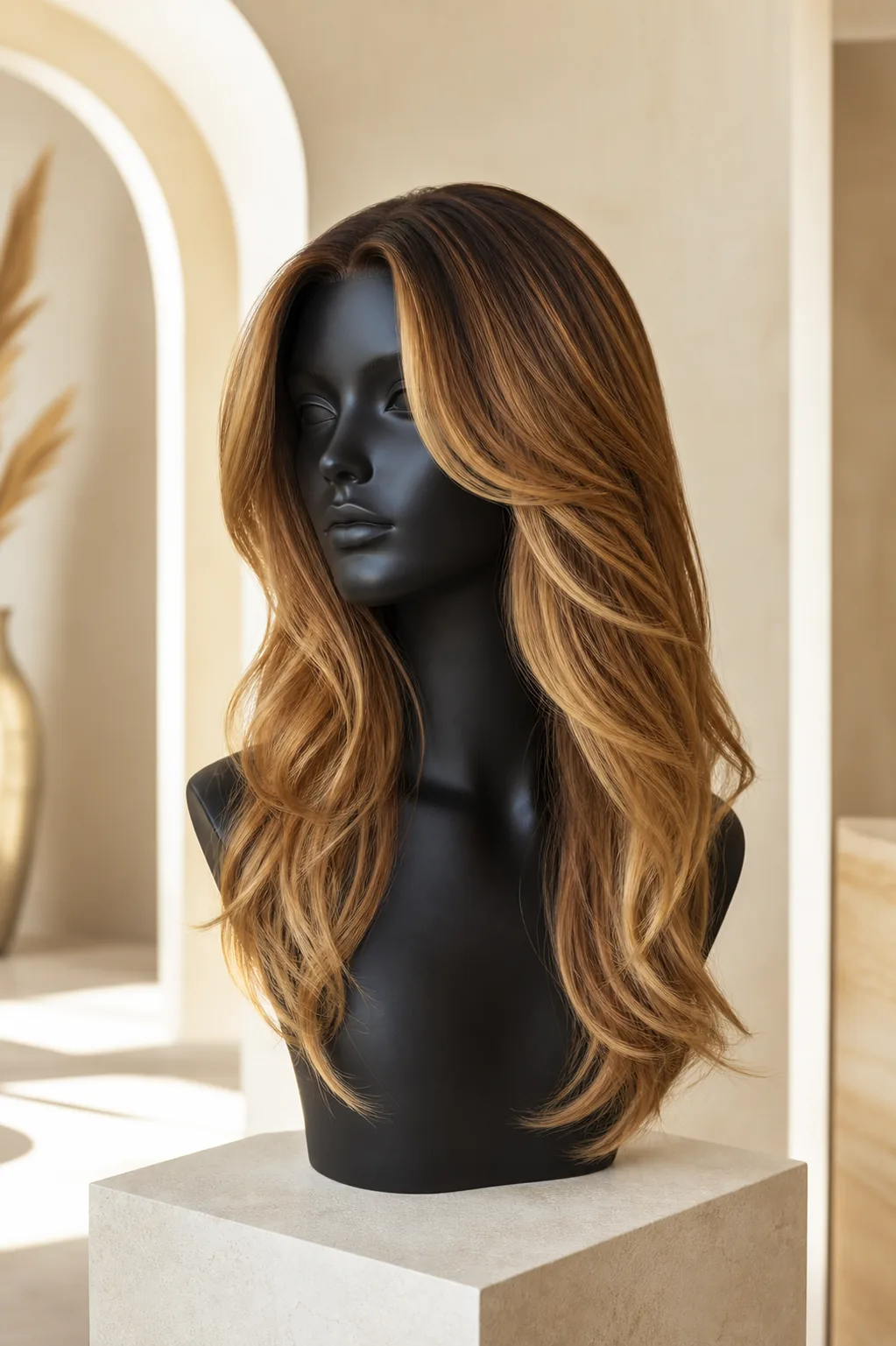
Custom color product study
The existing visuals establish a dimensional copper, honey and brown direction. Strict side, back, root and end photographs must still come from the exact paid sample before color approval.
Swipe to inspect all 6 references
Required from the exact physical sample under the approval lighting.
Required from the same physical sample—not generated from the hero angle.
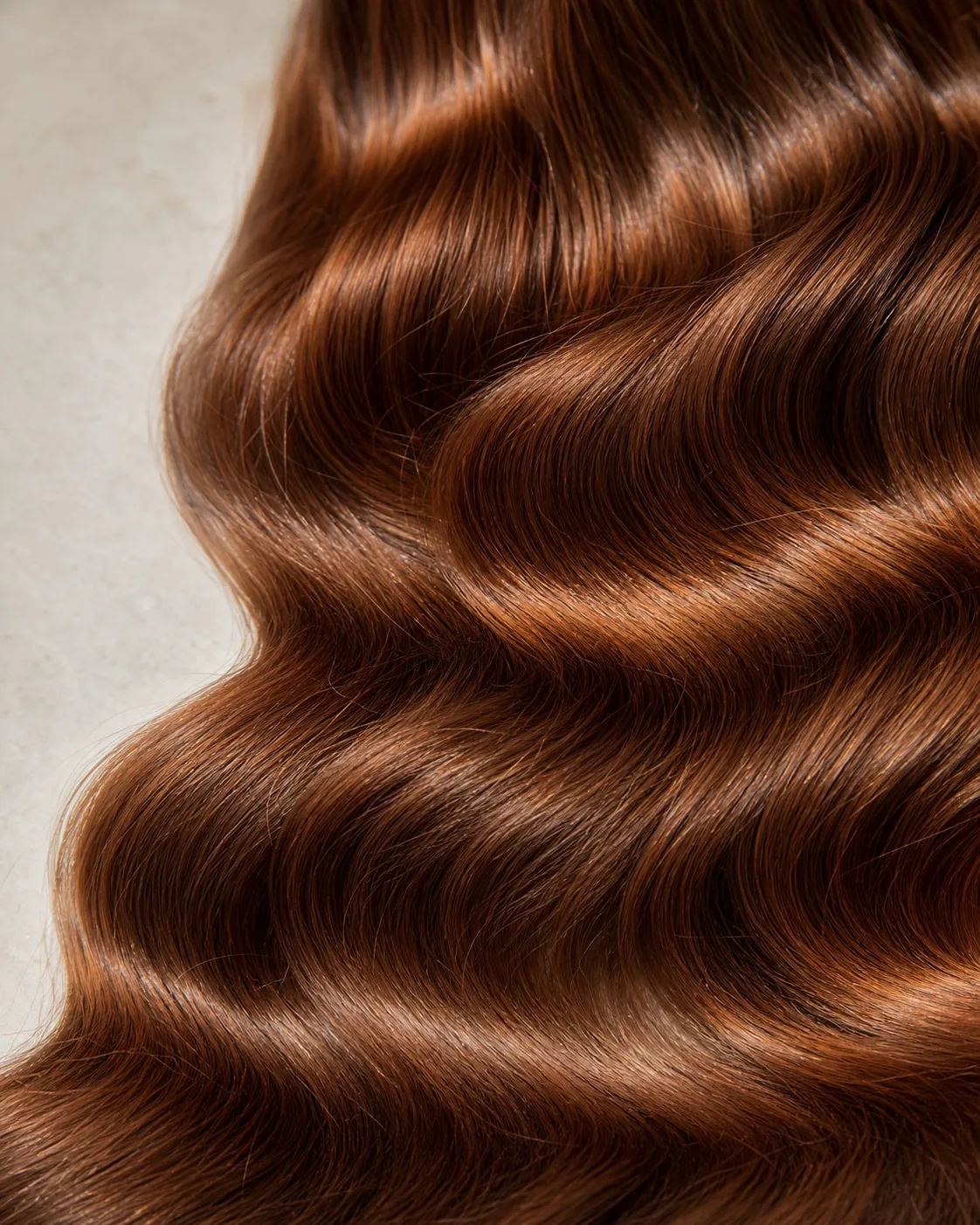
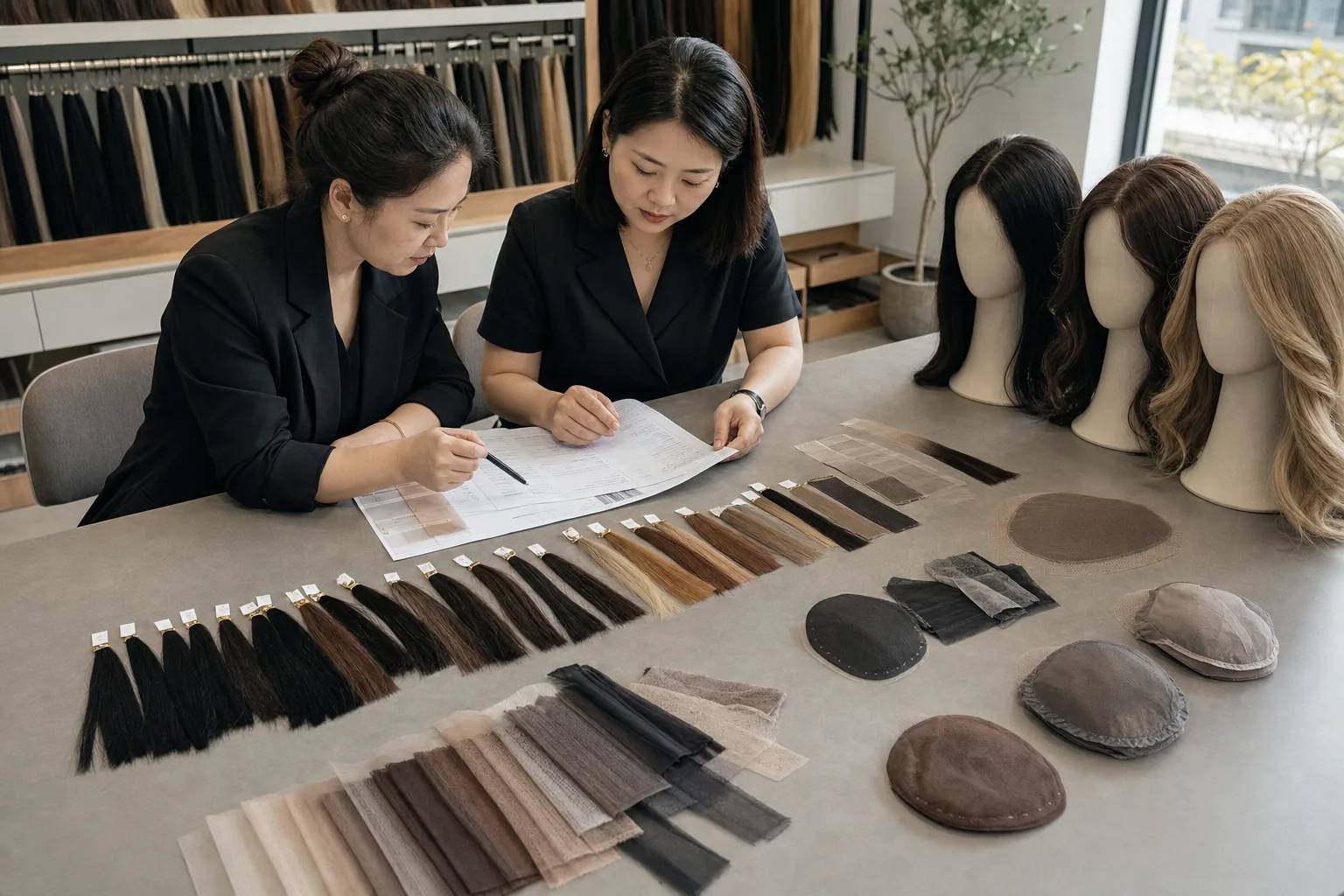
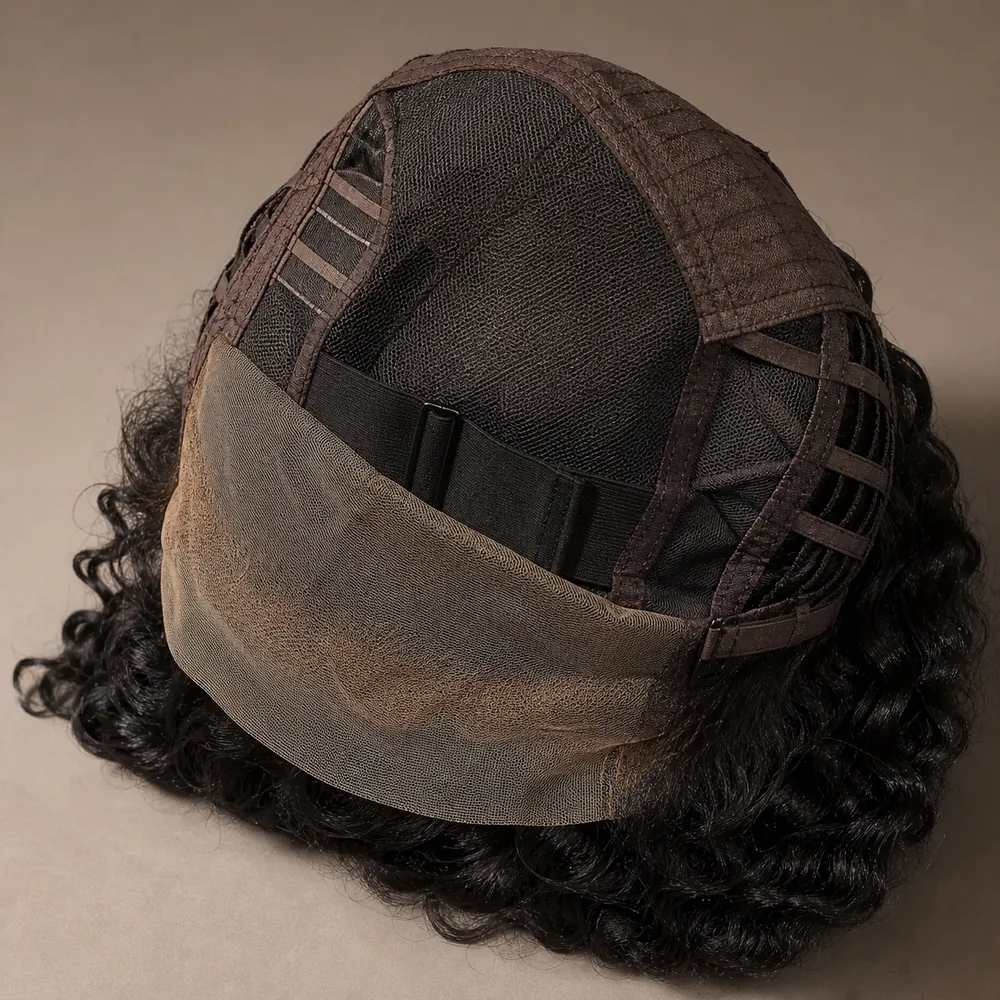
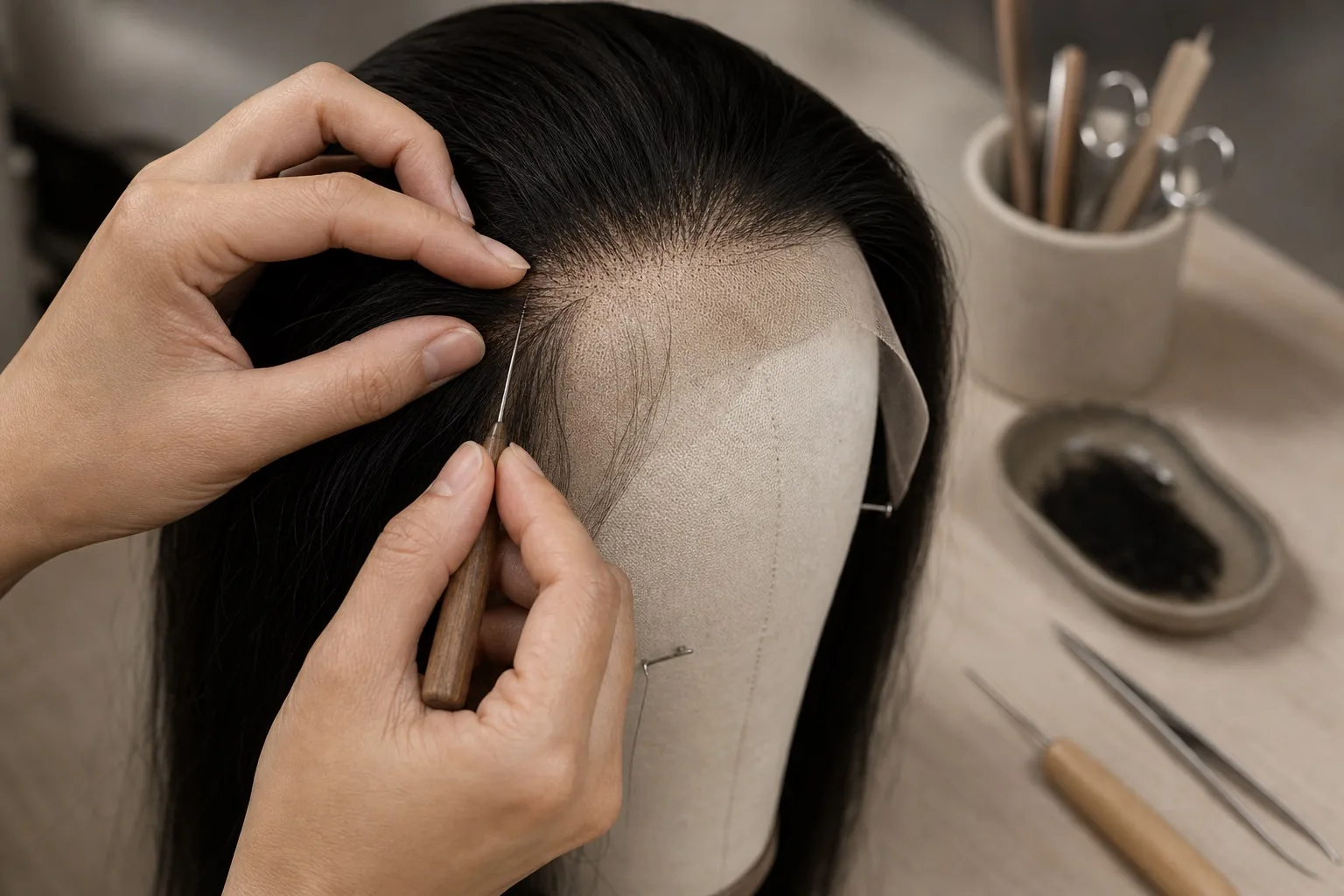
The primary, close color and development images are AI-assisted presentation or process directions. The cap image is a generic construction reference. They are not one physical sample, customer result, factory record, controlled-light color proof or guarantee of exact photo matching or zero batch variation. The deliberate side and back evidence panels show what must be photographed from the exact paid sample before written approval.
Custom color & texture options
A shade name cannot specify a custom wig. Connect color, texture, construction and evidence so the buyer can judge the complete result.
Mark which image controls the project and which images contribute only a root, highlight, texture or finish idea.
Describe the starting depth and cool, neutral or warm direction. A screen image alone cannot define an exact production color.
Map the root from the hairline and parting through each transition instead of writing only “shadow root”.
Record the width, brightness and position of highlights or dimensional tones in every visible area.
Approve color in the intended texture and defined viewing state because reflection and shadow change with movement.
Confirm the lace or cap, parting, hairline, 10–32 inch regular length and 150%–250% density starting direction together.
Use consistent lighting, exposure and background for the identified physical sample; lifestyle imagery remains presentation only.
Save the sample ID, maps, approval photographs and written revisions as the reference for planned repeat production.
Your development brief
Turn an inspiration image into a color, construction and commercial record that can be quoted and physically approved.
Reference-led custom color and texture development by project.
One primary image, supporting references, must-keep features and unacceptable results.
Base depth, dominant tone, undertone and root direction discussed separately.
Base depth, cool/neutral/warm direction, root color, depth, length and transition.
Front, both sides, top, back and end mapping for dimensional color.
Regional map, light/dark balance, highlight width, transition position and end tone.
Straight, body-wave, deep-wave or curly reference direction by project.
Texture reference, parting, intended finish and the exact state used to review color.
100% human hair; regular 10–32 inch lengths; 150%, 180%, 200% or 250% density starting points; lace and cap directions by project.
Length, density, lace or cap, hairline, parting, securing and cap size or measurements.
One custom sample before planned bulk; private-label packaging quoted separately.
Sample ID, controlled-light views, revisions, destination, quantity, timing, packaging and written approval.
Have a color reference?
WhatsApp opens with a color-and-texture brief ready. Add the root, placement, construction and commercial details you already know.
Direct answer
Send one primary color reference and define the base tone, root depth, placement map, texture state, construction, length and density. Approve the front, sides, back, roots and ends under consistent lighting on one identified physical sample before planned bulk production. A screen image alone cannot guarantee an exact color match.
For professional buyers
The value is not a fashionable color name. It is a complete placement and approval record that a brand can evaluate before planned scale.
Front, both sides, back, roots and ends reveal whether the color story remains balanced around the complete wig.
Approve the intended straight, wave or curl state so reflection, shadow and dimensional placement are reviewed as one result.
Retain the sample ID, placement map, consistent-light images and revisions while acknowledging normal material and batch variation.
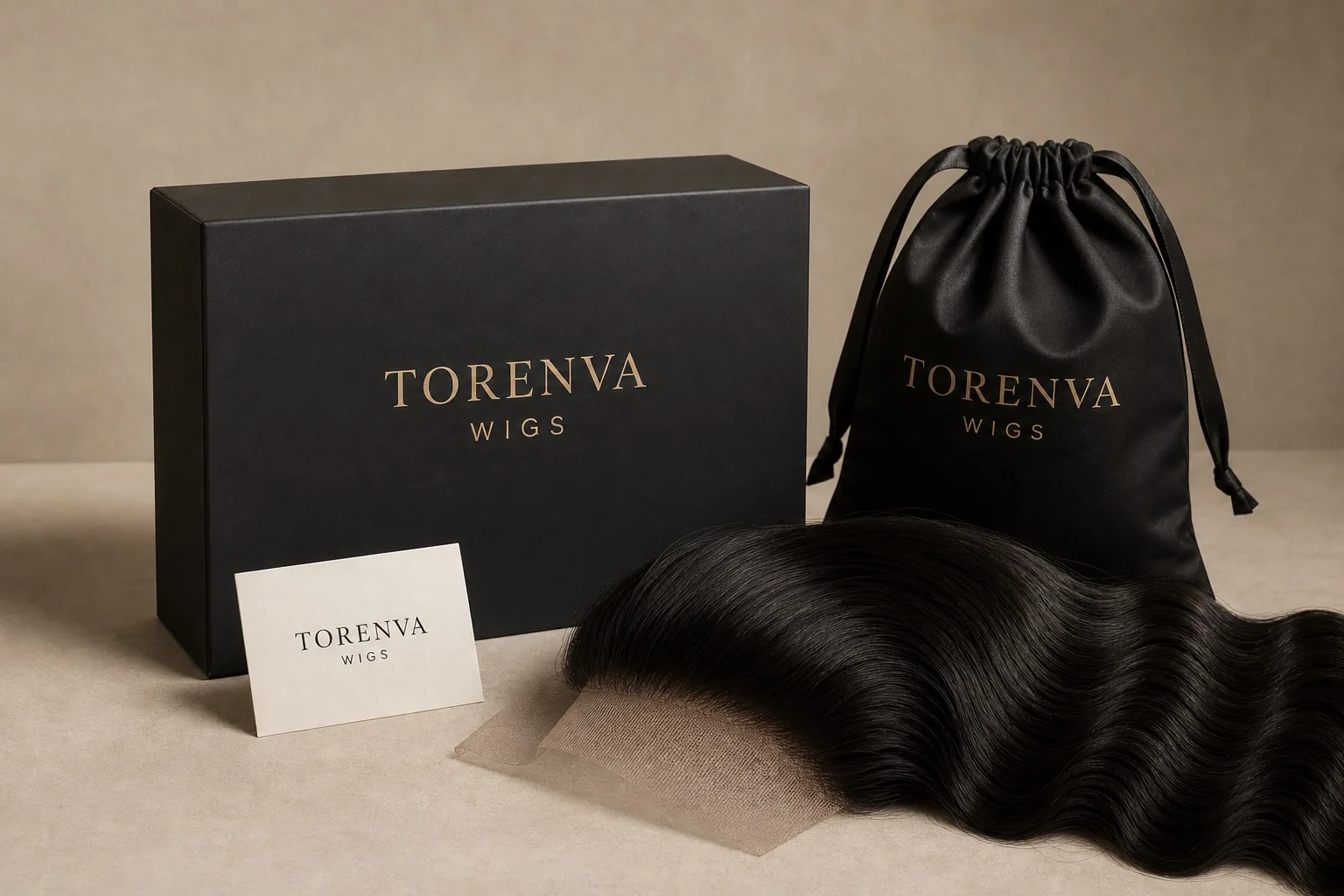
Private label & packaging
Connect the product name, sample ID and approved color direction across the wig label, product card and packaging brief. Wig sampling can start from one piece; packaging MOQ and cost are quoted separately by selected item.
Sample-to-bulk process
Connect the primary reference, root and placement map, physical sample ID, exact approval views and written revisions before planned repeat production.
Custom color wig FAQ
Direct answers for brands defining color, texture, construction, physical-sample approval and repeat planning.
Send one primary color reference, then define the base depth and undertone, root direction, placement across the front, sides, top, back and ends, texture state, construction, length, density and cap fit. Conflicting inspiration images should be ranked rather than treated as one exact specification.
A photo is a useful direction, but screen settings, lighting, camera exposure, hair texture and material variation can change how color appears. TORENVA does not promise an exact photo match. Approve one identified physical sample under consistent lighting before planned bulk production.
Map the root color and depth, transition range, highlight width and brightness, and placement across the front, both sides, top, back and ends. Names such as balayage or ombré are starting directions, not a complete placement map.
Not necessarily. Texture changes reflection, shadow and how different tones are distributed visually. Approve the color in the intended straight, wave or curl state and record the styling condition used for review.
TORENVA uses 100% human hair. Regular length directions are 10–32 inches and density starting points are 150%, 180%, 200% and 250%. Closure, frontal, HD lace and glueless directions can be discussed by project, with the complete combination confirmed for the quotation and sample.
Yes. Wig MOQ starts from one piece. A custom sample is usually around seven production days after the written specification and payment confirmation. Complex color placement, correction or construction may require different timing, which is confirmed in the individual quotation.
Assign the physical sample an ID and record the reference set, root and placement map, texture state, construction, length, density, controlled-light front, side, back, root and end views, and every written revision. The record supports repeat planning but does not promise zero natural material or batch variation.
Send the complete color and wig brief, destination, planned quantity and requested labels, tags, cards, bags, boxes or inserts. Wig sampling can start from one piece; packaging MOQ and cost depend on the selected packaging item and are confirmed separately.
Color & texture approval evidence
Warm editorial imagery can establish a mood. Only the exact paid sample under consistent lighting can approve the root, regional placement, color balance and visible texture state.
Project specification
Send what you know. We can clarify missing information before the project is quoted.
Choose one primary color reference and identify which supporting images are inspiration only.
Record base depth, undertone, root direction, transition and the color map across every visible area.
Approve the color in the intended straight, wave or curl state under consistent lighting.
Confirm the lace or cap direction, parting, hairline and cap size or measurements with the color brief.
Include regular 10–32 inch length and 150%–250% density starting directions in the same sample record.
Assign the physical sample an ID, record revisions and include private-label or packaging requirements separately.
One sample to start
Sample production is approximately seven days after the written specification and payment confirmation. Final timing is stated for the individual quotation, and complex construction or color may require different timing.
Made-to-order enquiry