Direct answer
What is the difference between straight, body wave and deep wave wigs?
Straight usually shows the longest visible drop and least built-in pattern. Body wave uses broader, looser movement. Deep wave uses a tighter, more frequent wave, while curly covers multiple curl shapes. These are starting labels—not complete specifications.
The same labeled length and density can look different across textures. A professional brief should therefore define the reference, viewing state, measurement method, distribution through the ends and motion expected from one identified paid sample.
Four starting directions
Name the look.
Then define the evidence.
Texture names are useful for discovery, but suppliers and buyers can use the same name for visibly different patterns. Anchor the name to a clear reference and an approvable state.
Straight
Define the surface, movement, body and lowest-end finish. If “bone straight,” “silky straight” or “yaki” matters, treat it as a separate reference-led decision—not a synonym.
Body wave
Define the width of the wave, where it begins, how it opens after handling and how much movement should remain at the mid-lengths and ends.
Deep wave
Define pattern frequency, root-to-end distribution, natural settled state and the approved relationship between visible length, volume and ends.
Curly
Do not rely on one broad label. Record the curl-shape reference and the exact dry, damp, styled or tested state used for sample review.
Visual comparison
Three directions.
One balanced view.
These equal-format images help a buyer compare overall line and pattern without text covering the hair. They are separate development directions, not one matched sample or proof of a lace, cap, length or density combination.
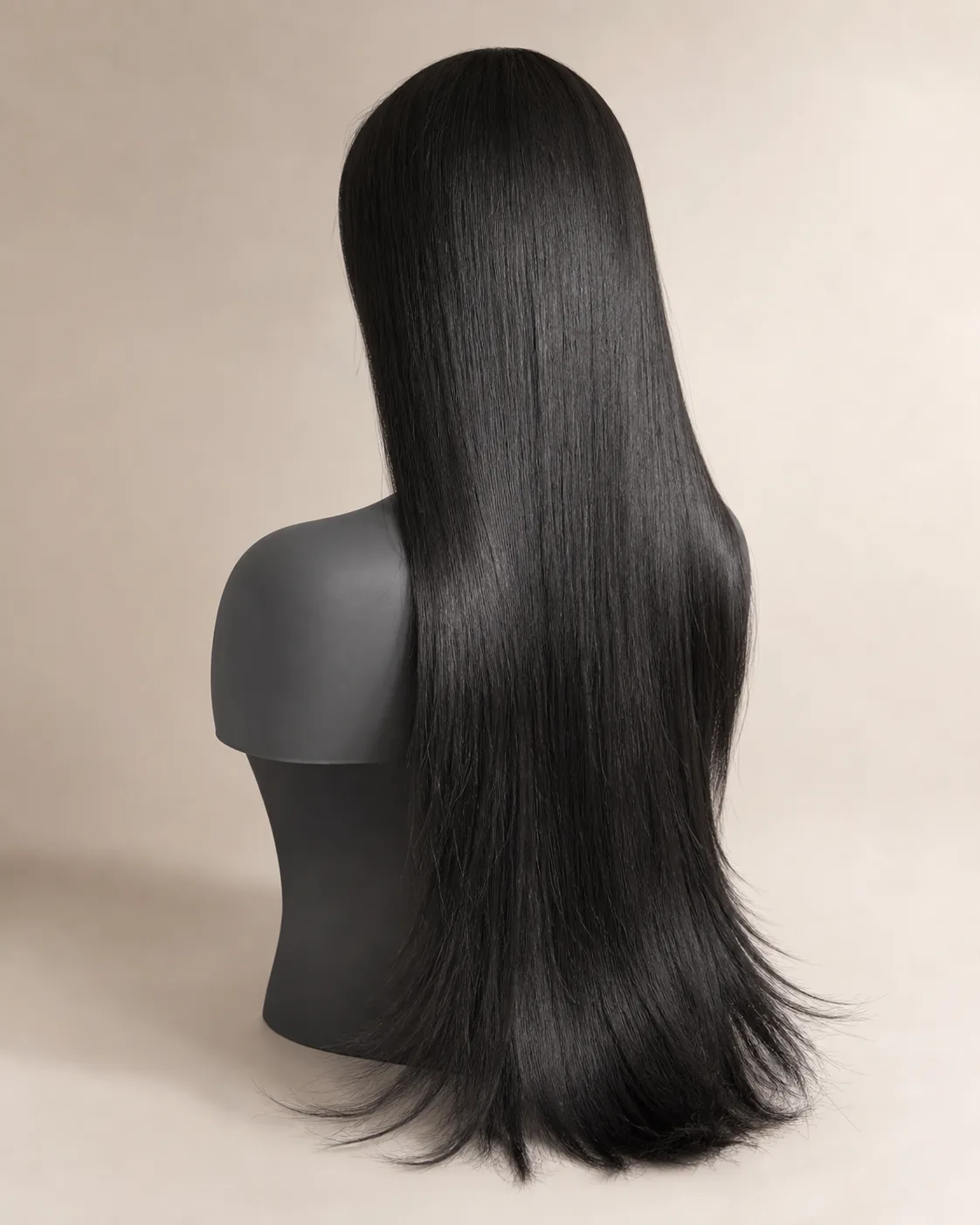
AI-assisted development direction; final specification is approved on the physical sample.

AI-assisted development direction; construction and texture remain project-specific.
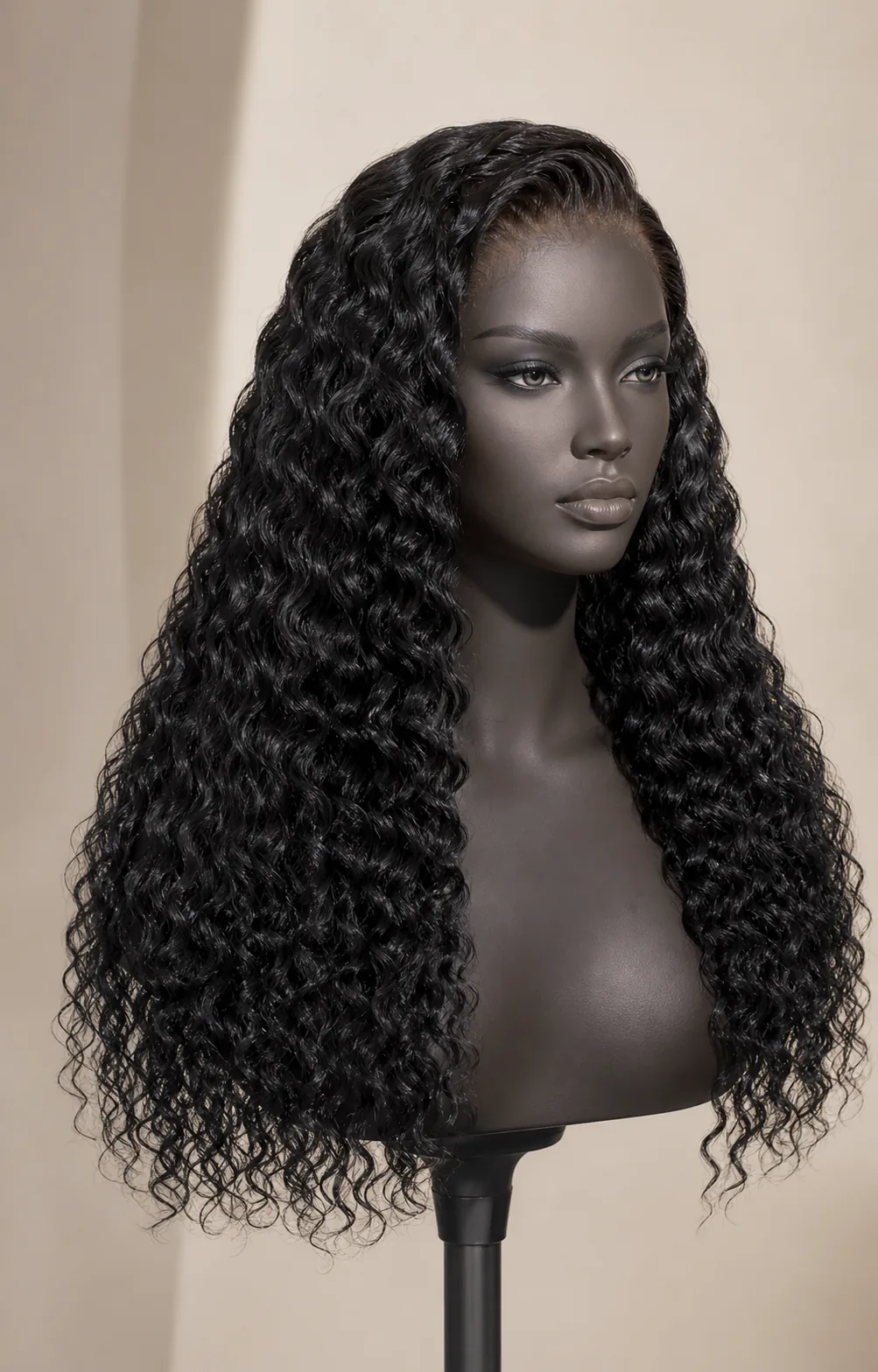
AI-assisted development direction; it does not prove one finished sample specification.
Quotation-ready matrix
Six decisions
before sampling.
This matrix replaces an ambiguous texture name with fields the buyer and supplier can inspect, revise and approve.
Primary image or video, pattern size, starting point, surface and intended end direction.
Using “straight,” “body wave,” “deep wave” or “curly” as the complete specification.
Natural dry, damp, styled, combed, settled or another written review state.
Products, handling and preparation used before every comparison view.
Regular 10–32 inch project directions; other lengths require project confirmation.
Measurement path plus the natural-fall front, strict side and complete back silhouette.
150%, 180%, 200% or 250%, considered with length, texture and construction.
Crown body, mid-length distribution, lowest-end fullness and complete silhouette.
4×4, 5×5, 13×4 or 13×6 direction; discuss HD lace or glueless fit by project.
Actual coverage, lace, shade, hairline, parting, cap fit and securing method.
One paid sample with a written specification, destination and planned quantity.
Sample ID, exact media, observed tests, revisions and accepted repeat reference.
Turn a look into a brief
Send the texture—and define how it should be judged.
WhatsApp opens with the viewing state, length, density, construction and sample-evidence fields ready for you to complete.
Movement references
Motion reveals what
a still image can hide.
Use video to discuss movement, pattern scale and the way the ends settle. These selected product-footage clips are separate references, not proof that all three textures share one sample, construction or test history.
Same-sample evidence
Five checks before a texture becomes a repeat reference.
Beauty images can start a direction. Approval requires the same identified sample, a stable viewing method and written observations.
- 01
Confirm the sample and state
Match the physical sample, written specification and primary texture reference, then record whether it is natural dry, damp, styled, combed or settled.
- 02
Measure and view the complete silhouette
Use the agreed length method and capture front, strict side and full back views without cropping out the lowest ends.
- 03
Inspect distribution and ends
Review the crown, mid-lengths, pattern consistency and end fullness instead of relying on a density percentage alone.
- 04
Record only the tests performed
If washing, drying, detangling or restyling matters, define the method first and record the observed result without turning it into a universal guarantee.
- 05
Lock the approval reference
Connect the sample ID, views, motion clip, construction, written revisions and accepted state before planned repeat production is discussed.
For professional buyers
What this comparison helps a brand decide.
The strongest texture choice is the one a brand can describe, evaluate and communicate consistently—not the label with the most promotional adjectives.
Which silhouette fits the collection?
Compare visible drop, side volume, pattern scale and ends in the intended length rather than choosing from a cropped front image.
Which result can be approved clearly?
Define the viewing state and evidence sequence so buyer and supplier are reviewing the same appearance.
Which claim is safe to publish?
Publish only the texture, movement and test result supported by the identified sample. Keep generic development visuals separate from product proof.
Continue the product decision
Connect texture to length, construction and quality control.
Texture is one layer of the final wig. Use the long-wig page to specify proportion, the construction pages to define the front and the quality-control process to build an approval record.
What is the difference between straight, body wave and deep wave wigs?
Straight directions show little built-in wave, body-wave directions use broader and looser movement, and deep-wave directions use a tighter, more frequent pattern. These are useful starting labels, but the exact pattern, viewing state, movement and finish still need a visual reference and paid-sample approval.
Are deep wave and curly wigs the same?
No universal naming rule makes them identical. Deep wave usually describes a repeating wave direction, while curly is a broader family that can include different curl sizes and shapes. Send the exact visual reference and define the natural, styled or tested state expected for the sample.
Will the same length look equal in every texture?
Not necessarily. A straighter pattern can show more visible vertical drop, while wave and curl patterns can sit higher in their natural state. Record the measurement method and approve both the measured length and the natural-fall silhouette on the same sample.
Will the same density percentage look equal in every texture?
No. Texture, length, cap construction and distribution through the crown, mid-lengths and ends all affect visible volume. Use 150%, 180%, 200% or 250% as a starting point, then approve the complete silhouette rather than the percentage alone.
How should wig length be measured for a textured sample?
Agree the measurement path before production and record whether the review uses the natural settled state, a gently extended section or another written method. Keep the same method for sample approval and any planned repeat-production comparison.
Can a supplier guarantee that a wave or curl will return after washing?
A universal guarantee should not be inferred from the texture name. If wash, dry, detangling or restyling response matters, define the test method, products, handling and acceptance point for the identified paid sample, then record the observed result.
Which lace construction is best for each texture?
Texture does not determine one universal lace construction. Choose 4×4, 5×5, 13×4 or 13×6 coverage, lace and shade, hairline, parting, cap fit and securing method according to the intended product and approve the complete combination on the sample.
Can I start with one texture sample?
Yes. One custom wig sample can be discussed. Send the texture reference, viewing state, length, density, color, lace or construction, cap requirements, destination and planned quantity so feasibility and the quotation can be confirmed in writing.