Direct answer
Are pre-cut lace, pre-plucked, glueless and wear-and-go the same?
No. Pre-cut lace describes the trimmed lace edge. Pre-plucked describes a hairline-density treatment. Glueless describes the intended primary securing method. Wear-and-go describes the buyer’s expected level of finished readiness. A reliable manufacturing brief records all four separately.
TORENVA can discuss pre-cut lace and wear-and-go as custom development directions. The exact preparation, cap hardware, lace, fit and securing combination is not assumed from the name; it is confirmed for feasibility, quotation and one identified paid sample.
Four separate decisions
Do not let one trend label hide the specification.
A buyer should be able to point to the physical feature or wearing step behind every term. If it cannot be checked on the exact sample, it is not yet an approved claim.
Pre-cut lace
Confirm the coverage, hairline outline, temple and ear relationship, remaining lace edge and whether further trimming is expected after delivery.
Pre-plucked
Confirm the intended front-density transition, hairline shape and both-temple appearance. The term does not prove knot treatment, lace shade or fit.
Glueless
Confirm measurements, cap construction, adjustment and attachment points. It means adhesive is not the intended primary method—not that optional backup securing is forbidden for every wearer.
Wear-and-go
List the preparation already included and every step still expected from the wearer, including trimming, adjustment, parting, styling or optional tape and spray.
Quotation-ready matrix
Six decisions
before sampling.
This matrix turns a broad “wear-and-go” request into fields the buyer and supplier can verify in writing.
4×4, 5×5, 13×4 or 13×6 by project.
Actual coverage, material and shade; larger or unlisted sizes require written feasibility confirmation.
Hairline shape, temple and ear relationship, remaining lace edge and expected final trimming.
Relaxed front, both temples and both ear areas on the same identified sample.
Hairline-density direction, parting, knot or lace preparation requested and any baby-hair direction.
Pre-cut does not automatically mean pre-plucked, pre-bleached or fully styled.
Cap size or head measurements, adjustment, attachment points, intended wear time and activity.
Record the actual fit and every optional tape, spray or other backup used in the demonstration.
100% human hair; 10–32 inch regular lengths; 150%, 180%, 200% or 250% density.
Length, texture, color, distribution, ends and intended finished appearance.
One paid sample direction, destination, planned quantity and private-label or packaging request.
Sample ID, included preparation, exact media, written revisions and final accepted specification.
Turn a reference into a brief
Send the look—and describe what “ready” must include.
The WhatsApp message opens with the lace, hairline, fit, securement, hair and evidence fields ready for you to complete.
Fit before convenience
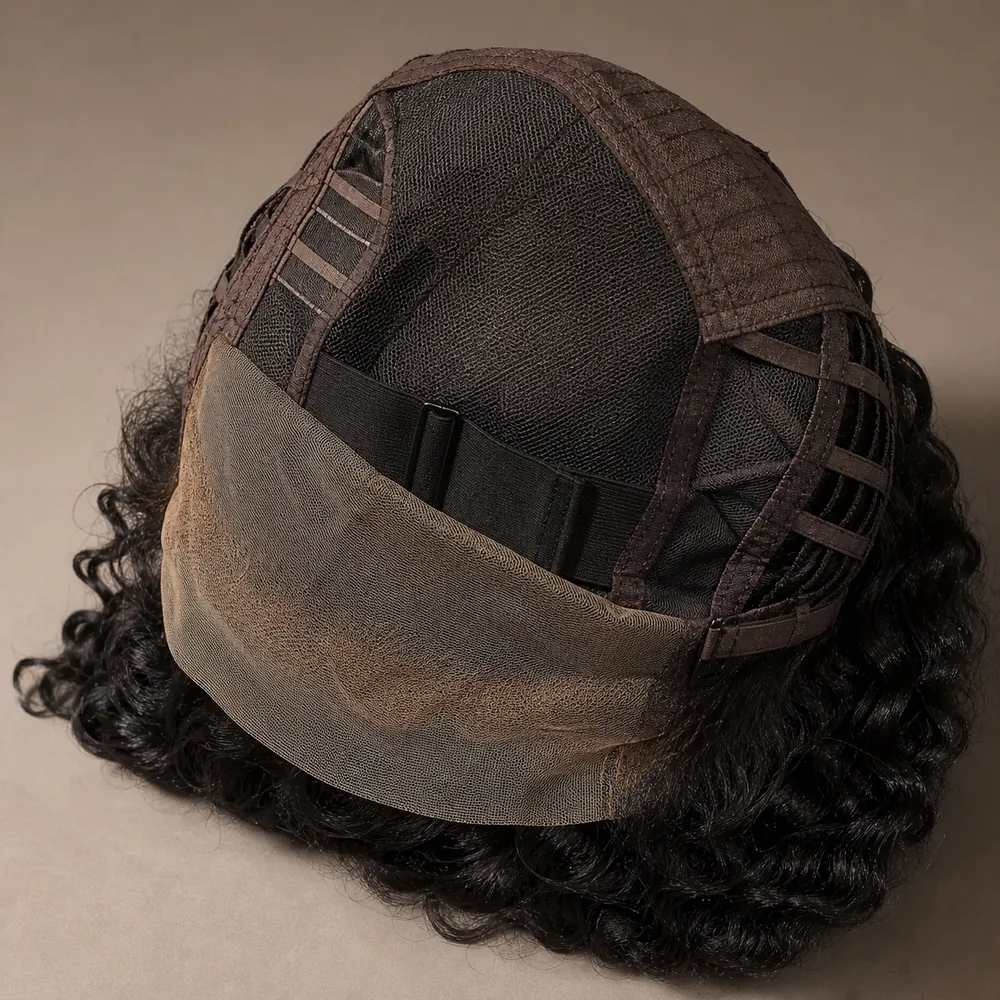
The inside cap decides whether “easy” is believable.
A trimmed lace edge does not correct a cap that is too long, too loose at the nape or misaligned at the temples and ears. Approve the complete relationship between measurements, cap, lace outline and securing method.
- MeasurementsTarget cap size or complete head measurements
- FrontHairline, temple and ear relationship
- AdjustmentExact components confirmed for the sample
- UseIntended wear, activity and optional backup securing
- DisclosureRecord every step used in the put-on demonstration
Same-sample proof
Seven views that make readiness checkable.
Beauty imagery can establish a visual direction, but the buyer should approve construction and wearing claims from unambiguous evidence of the same identified sample.
- 01
Relaxed front
Show the lace edge and hairline without a hand, filter or hairstyle hiding the transition.
- 02
Both temples and ears
Show left and right separately so lift, overlap and alignment are not concealed by the strongest angle.
- 03
Side and back fit
Record cap balance, nape relationship, silhouette and the securing result from more than the front.
- 04
Inside-cap construction
Photograph the actual sample’s lace, seams, adjustment and attachment components before styling.
- 05
Close lace edge
Show the cut outline, remaining edge, shade and requested front preparation under controlled light.
- 06
Unedited put-on sequence
Show every adjustment, trimming, styling and optional securing step instead of presenting only the finished reveal.
- 07
Written approval record
Connect the sample ID, specification, evidence, revisions and accepted readiness level before planned repeat production.
Claim control
Describe only what the sample proves.
Convenience language should be specific enough that a customer can understand what is included and what still depends on fit, preparation or personal preference.
Included preparation
Name the actual pre-cut outline, hairline work, parting, adjustment and demonstrated put-on steps documented on the approved sample.
Universal fit or adhesive-free guarantees
These erase wearer measurements, intended use and optional backup securing. They should not be published without evidence that supports the exact scope.
Marketing image and sample record
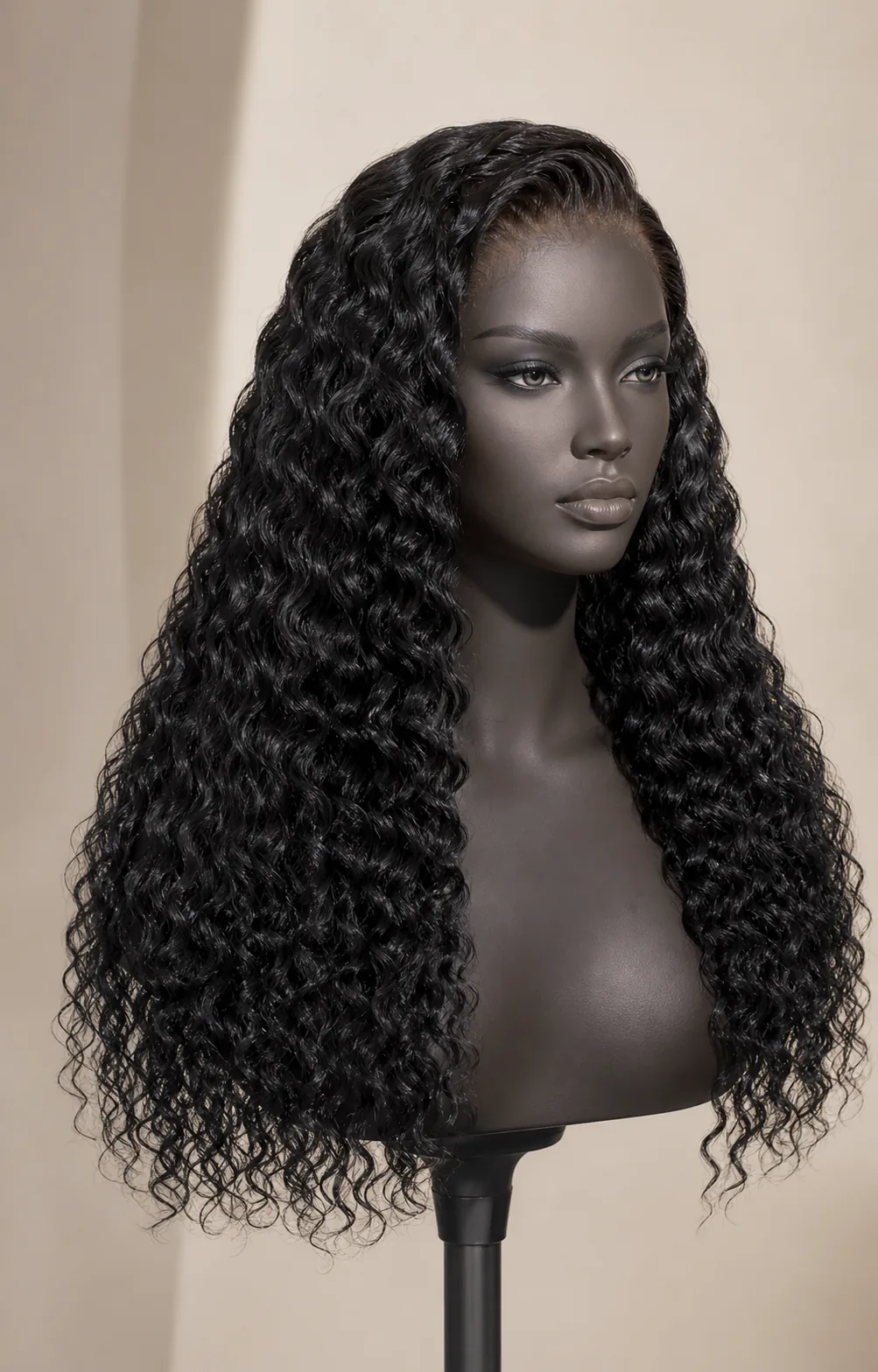
The image on this guide shows a glueless visual direction. It does not prove pre-cut lace, a specific cap system or the preparation included in a future custom sample.
Choose the construction first
Closure and frontal directions create different front-area decisions.
Compare the confirmed 4×4 and 5×5 closure starting points with 13×4 and 13×6 frontal starting points, then connect the selected direction to the sample-to-bulk approval workflow.
Are pre-cut lace, pre-plucked, glueless and wear-and-go the same thing?
No. Pre-cut describes the lace edge, pre-plucked describes hairline density preparation, glueless describes the intended primary securing method, and wear-and-go describes the buyer’s expected level of finished readiness. Record each decision separately in the written brief.
Does pre-cut lace automatically make a wig glueless?
No. Trimming the lace does not confirm cap fit, adjustment, ear-tab or temple alignment, or the securing method. The complete cap, lace and securing combination must be confirmed for the sample.
Does a glueless direction guarantee flat temples and a perfect fit for every wearer?
No. Fit depends on the target measurements, cap construction, lace outline, temple and ear relationship, adjustment and intended use. Approve those areas on the identified sample instead of relying on a universal fit claim.
What should a buyer specify for the pre-cut lace outline?
State the intended 4×4, 5×5, 13×4 or 13×6 coverage direction, hairline shape, temple and ear relationship, desired remaining lace edge and whether any further trimming is expected after delivery. Clear front and both-side references are required.
Which preparation details should be confirmed in writing?
Confirm the lace edge, hairline density direction, knot or front preparation requested, parting, cap size or measurements, securing components and the exact steps the wearer is expected to complete. Do not assume these from a marketing name.
Can I start with one pre-cut lace or wear-and-go sample direction?
Yes. One custom wig sample can be discussed. Pre-cut lace and wear-and-go are development directions, while the exact preparation, cap, lace and securing combination remains subject to feasibility, written quotation and sample confirmation.
What evidence should be used to approve wear-and-go readiness?
Use the same identified sample for a relaxed front view, both temples and ears, side and back views, inside-cap view, close lace-edge view and an unedited put-on sequence. Record any optional tape, spray, trimming or styling used during the demonstration.
Can unlisted lace sizes or constructions be ordered?
TORENVA currently publishes 4×4, 5×5, 13×4 and 13×6 as confirmed project directions. Any larger or unlisted coverage requires written feasibility confirmation before it is described as available or included in a quotation.